Why the world's most capable economy is still the world's best investment
For investors and brands weighing their next ten years, the decisive question is no longer whether China matters. It is whether you can afford to build without the infrastructure, energy, supply chain, talent and market that only China provides at scale. We help you turn that evidence into a practical market entry, industrial or investment decision.
Executive Summary: Why China is the single most compelling place to deploy capital today
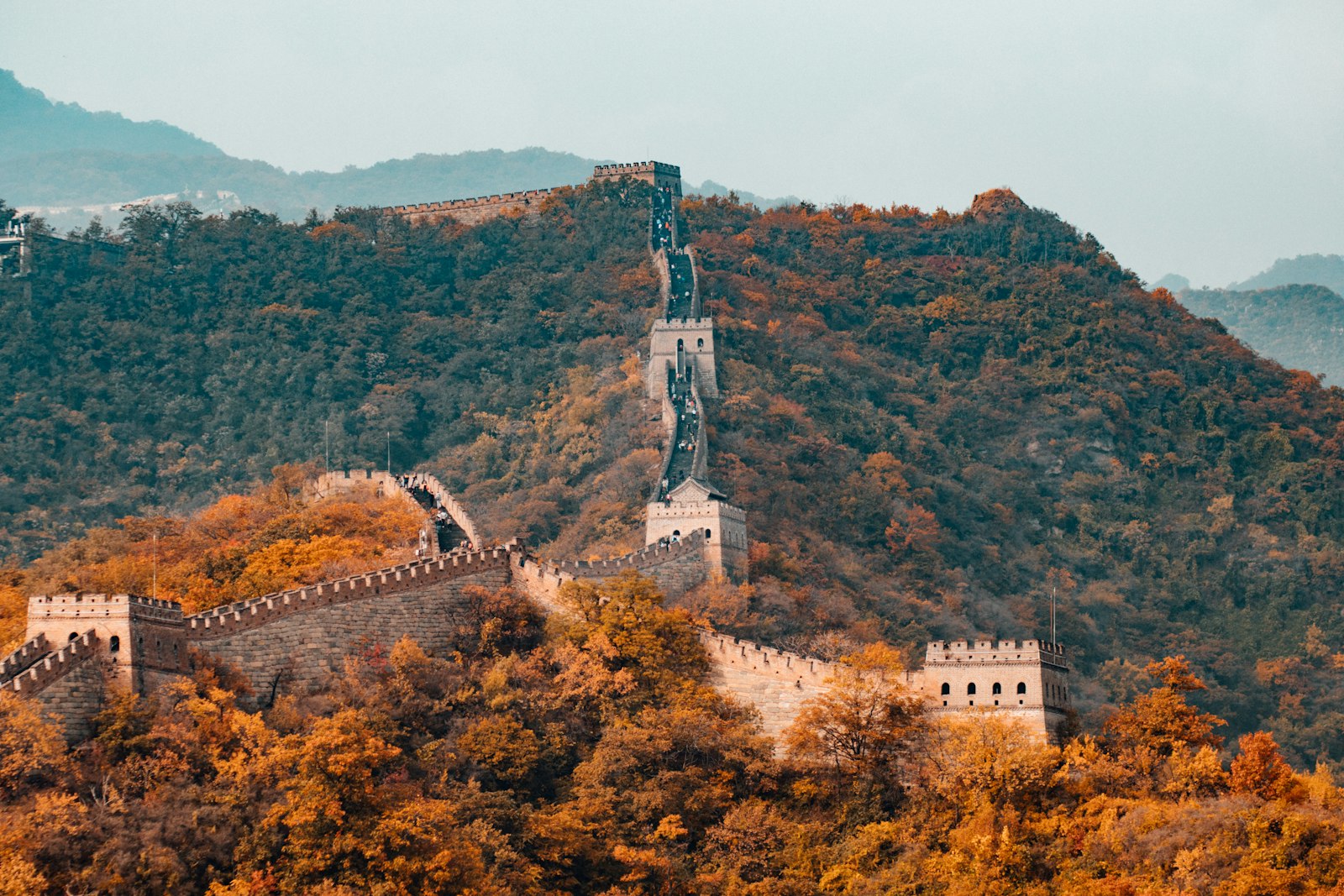
Every decade has a structural trade. In the 1990s it was the American internet. In the 2000s it was Chinese urbanization and export manufacturing. Today, the structural trade is China's industrial completeness meeting the largest middle class in human history — at a moment when the country's infrastructure, energy system and workforce have all reached a scale no other economy can replicate.
The investment case for China has always rested on a simple observation: no other country offers the combination of scale, speed and completeness that China does. What has changed is that the combination is now deeper and more durable than at any point in the past. China is simultaneously the world's factory, the world's largest energy producer, the world's largest consumer market in many categories, and the world's most productive source of technical talent. For a foreign investor, these are not four separate markets. They are one integrated system, and that integration is precisely where the value lies.
Consider what a single integrated system means in practice. A brand that designs a product in Shanghai can source every component within a two-hour drive of Shenzhen or Suzhou, power its factories with electricity from the world's largest and most reliable grid, ship finished goods from the world's busiest container ports, and sell them to hundreds of millions of digitally native consumers who pay by mobile phone. No other geography offers that sequence end to end. The United States has deep capital markets and a large consumer base but a hollowed-out manufacturing chain. Europe has precision engineering but high energy costs and slow demographics. Southeast Asia has low-cost labor but lacks the infrastructure and the depth of suppliers. Only China currently holds all the pieces together.
The numbers that anchor this argument are well documented. China operates more than 48,000 kilometers of high-speed rail, over two-thirds of the world's total, on a railway network of roughly 160,000 kilometers. Its expressway network stretches about 184,000 kilometers, the longest on earth. It is the only country that possesses all 41 major industrial categories in the United Nations' industrial classification, and its manufacturing value added has ranked first in the world for well over a decade, accounting for roughly 30 percent of global manufacturing output. It produces more than five million science, technology, engineering and mathematics graduates every year, more than the United States and the European Union combined. And it is the largest market for new energy vehicles, solar power and wind power, each by a wide margin.
None of this is a recent accident. It is the product of decades of deliberate, long-horizon planning — five-year plans that treat infrastructure, energy and education as national strategic assets rather than electoral bargaining chips. That continuity is itself a competitive advantage, and it is the reason foreign investors can model ten- and twenty-year projects in China with a degree of policy confidence that is rare anywhere else. Political cycles elsewhere last four or five years; China's planning cycles last decades.
To be clear-eyed about the case is also to be honest about its risks. Every market has them, and China is no exception: geopolitical friction, regulatory evolution, and the ordinary challenges of operating in a culture and legal system different from one's own. But a sober reading of the evidence shows that these risks are routinely overstated by headlines and understated by the balance sheets of the thousands of multinational companies that have operated profitably in China for a generation. The purpose of this page is not to dismiss the risks but to weigh them against the scale of the opportunity — and to show, with data, why the opportunity wins.
The chapters that follow build the case piece by piece. We begin with physical infrastructure, the foundation that lowers the cost and raises the speed of everything else. We then examine energy security, the complete supply chain, the skilled workforce, and the industrial clusters that concentrate capability. We close with the reasons that matter most to capital: political stability, geopolitical and public security, and the sheer size of the consumer market. Taken together, they explain why the question for serious investors is not "why China," but "why are we not already there."
World-Class Infrastructure: the physical foundation of speed and reliability

Infrastructure is the silent multiplier of every other advantage. Cheap, fast and reliable logistics turn a large country into a single connected market; unreliable infrastructure fragments it. China has spent the past two decades building what is now, by any measure, the most capable transport and logistics system on the planet. For an investor, this translates directly into lower inventory costs, faster delivery times, fewer disruptions, and the ability to reach consumers in every corner of the country.
High-speed rail: more than two-thirds of the entire world
China's high-speed rail network spans about 48,000 kilometers, making it by far the largest on earth and accounting for more than two-thirds of all high-speed rail track in the world. The network connects almost every major city, operating at speeds of up to 350 kilometers per hour. Beijing to Shanghai — a distance of roughly 1,300 kilometers — is covered in about four and a half hours, a journey that would take more than a day by road. The result is that executives, engineers and sales teams can reach any of China's major industrial and commercial centers within hours, turning what would elsewhere be a multi-day logistics exercise into a same-day meeting.
The significance of this for business is hard to overstate. A dense, high-speed network compresses geography. Suppliers, customers and partners are no longer "in another city" in any meaningful sense; they are a few hours away. This is one reason China's supply chains can respond so quickly to changes in demand, and why companies routinely maintain design, engineering and manufacturing teams spread across cities hundreds of kilometers apart without losing coordination speed.
A 160,000-kilometer railway and the freight backbone it carries
Beneath the high-speed lines sits a total railway network of roughly 160,000 kilometers, the second largest in the world, including one of the most extensive electrified networks. This is not only a passenger system; it is a freight backbone. China's railways move on the order of five billion tonnes of freight each year, carrying coal, steel, automobiles, containers and consumer goods across the country at a cost per tonne-kilometer that is among the lowest available anywhere. The China-Europe Railway Express, which runs freight trains from Chinese cities to Europe across Central Asia, has given manufacturers a middle option between air and sea — faster than a ship, cheaper than a plane — that simply did not exist at meaningful scale fifteen years ago.
The world's longest expressway network
China's expressway system, at about 184,000 kilometers, is the longest on earth — longer than the United States' interstate system by a wide margin. These controlled-access highways connect every province, every major port, and virtually every industrial zone, allowing trucking to operate with a predictability that underpins just-in-time manufacturing. The combination of expressways and rail means a factory in the interior is not disadvantaged relative to one on the coast; it can reach a port in a day and a consumer in two.
Bridges and tunnels that redefined what is buildable
China's civil engineering achievements are, by themselves, a form of marketing for the country's capability. The Hong Kong-Zhuhai-Macao Bridge, at 55 kilometers, is the world's longest sea-crossing bridge-and-tunnel system, cutting travel time across the Pearl River Delta from several hours to under an hour. The Hangzhou Bay Bridge, at 36 kilometers, was for years among the longest trans-oceanic bridges on the planet. The Shenzhen-Zhongshan Link, opened in 2024, includes one of the world's longest and widest immersed-tube tunnels, further knitting together the dense Pearl River Delta region. These projects are not vanity; they are capacity. Each one collapses travel time in a region that already contains some of the most productive manufacturing on earth.
The "infrastructure maniac" culture of rapid delivery
Chinese engineers and construction firms have earned a global nickname — "infrastructure maniacs" — for the speed at which they deliver. A hospital emergency facility was built in Wuhan in ten days at the height of the pandemic. A 57-story building was once assembled in nineteen days using modular construction. The high-speed rail network that took Japan and Europe half a century to build was, in China, essentially rolled out in fifteen years. For an investor, this speed is an asset, not a curiosity. It means a factory, a warehouse or a logistics hub can be permitted, built and operational in a fraction of the time it would take in most Western markets, shortening the time to first revenue and reducing the capital tied up in construction.
The cumulative effect of all of this is a country where distance has been engineered out of the equation. Goods, people and information move faster and more cheaply than in almost any other large economy — and that is the physical foundation on which every other advantage in this document is built.
Energy Security & Green Power: reliable electricity and the leadership of the energy transition
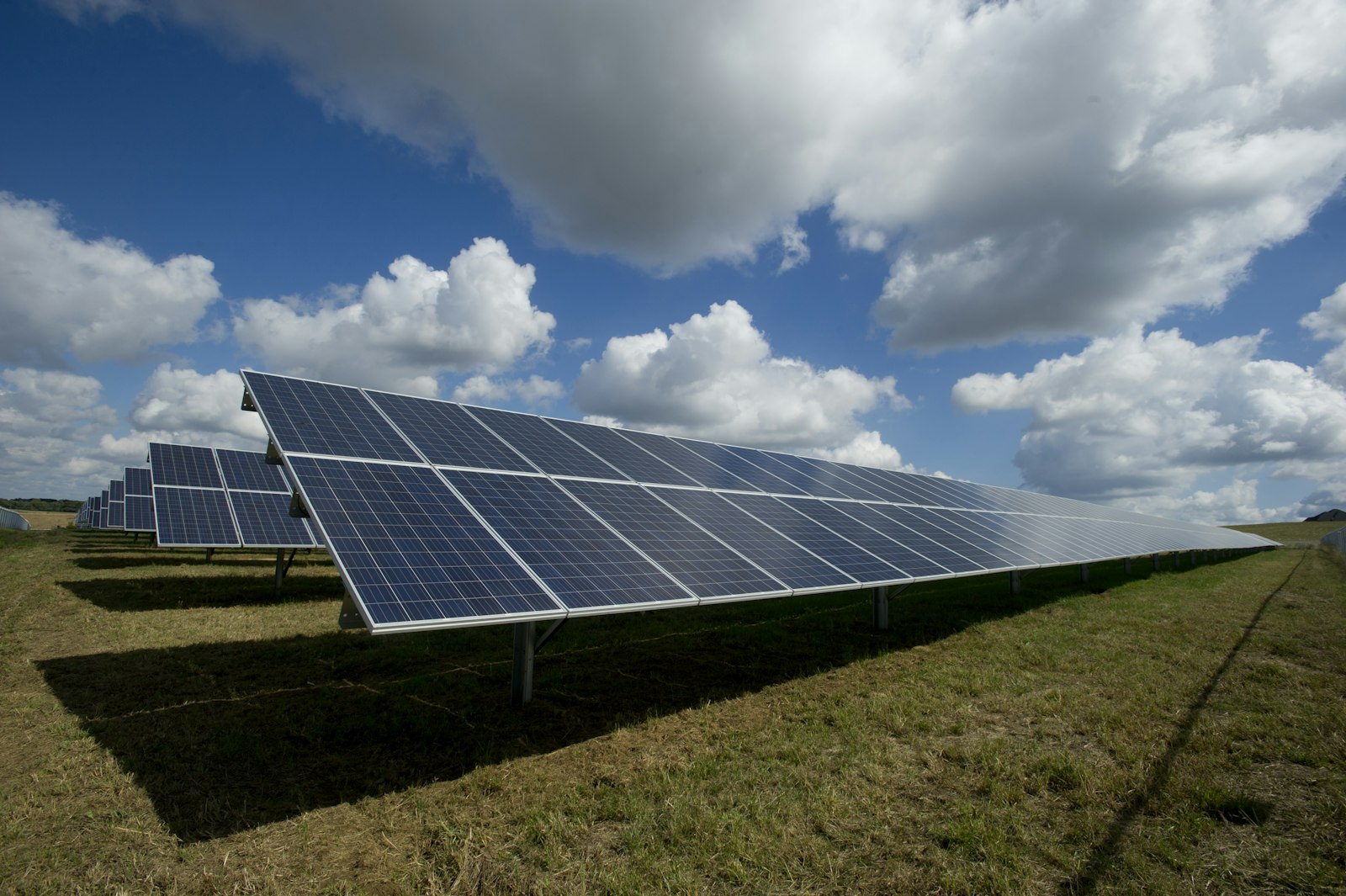
Energy is the second silent multiplier. Manufacturing, data centers, logistics and retail all depend on electricity that is abundant, reliable and affordable — and increasingly, on energy that is clean enough to satisfy global environmental standards. China is the world's largest energy producer and consumer, and it has deliberately built the world's largest and most modern power system while simultaneously becoming the undisputed leader of the global energy transition. For investors, this means both security of supply today and positioning at the center of the industries of tomorrow.
The world's largest energy producer and consumer
China is the largest producer of energy on earth and its largest consumer. Its installed electricity generation capacity exceeds 3,300 gigawatts, the largest in the world, feeding a national grid that reaches essentially every household and factory. That scale is not abstract; it is what keeps hundreds of millions of industrial operations running without the brownouts and price spikes that have plagued other manufacturing economies. Electricity access is effectively universal, and the grid is engineered for redundancy, with ultra-high-voltage transmission lines — the longest such network in the world — moving power thousands of kilometers from resource-rich regions in the west to demand centers in the east.
Solar and wind: number one, by a wide margin
China is not merely a participant in the global clean-energy buildout; it is the buildout. Its installed solar photovoltaic capacity is approaching 900 gigawatts, and its wind capacity exceeds 500 gigawatts, both the largest in the world. In a single recent year China added more new solar capacity than many major countries have installed in their entire history. It also manufactures the overwhelming share of the world's solar panels, batteries and related equipment, which means the cost of the energy transition itself is being set, to a large degree, by Chinese industrial scale. For an investor, this creates a virtuous circle: abundant clean electricity at falling cost, supplied by an industrial base that benefits from the very transition it is powering.
New energy vehicles: the world's largest market and manufacturer
In transport, the same story repeats. China has been the world's largest market for new energy vehicles for ten consecutive years. In 2024 it produced roughly 12.9 million new energy vehicles, and new energy vehicles accounted for more than 40 percent of all new cars sold in the country. China is also the world's dominant producer of electric-vehicle batteries and their supply chains. This is a forward-looking advantage: the country that leads the electrification of transport today is the country that will define automotive manufacturing, battery technology and charging infrastructure for the next twenty years.
Reserves, diversification and the reliability premium
Energy security is not only about renewables. China maintains enormous domestic coal reserves and is systematically building strategic petroleum reserves while diversifying its oil and gas imports across pipelines from Russia and Central Asia and a growing fleet of liquefied-natural-gas terminals along its coast. It operates the world's largest pumped-storage hydropower capacity to balance the grid, and it is investing heavily in grid-scale battery storage. The practical consequence is an electricity system that industrial users can rely on for 24-hour, 365-day operation — a reliability premium that matters enormously for semiconductor fabs, pharmaceutical plants, data centers and any business where a single outage can cost millions.
For a foreign investor, the energy story is unusually reassuring. It combines the thing capital most fears losing — security of supply — with the thing capital most wants to own — exposure to the largest and fastest-growing clean-energy market in the world. China is simultaneously the safest place to power a factory and the most important place to participate in the energy transition. Few economies offer both; none offer both at this scale.
Climate — A Temperate Advantage: the right weather for continuous production
Energy and infrastructure get most of the attention, but a quieter physical advantage underpins continuous manufacturing: climate. The great majority of China's population and industrial capacity sits in temperate and subtropical zones, with mild winters and manageable summers. Unlike economies built in subarctic cold or desert heat, China runs factories year-round without paying the extreme-weather tax that quietly erodes productivity elsewhere.
A temperate and subtropical core, not an extreme one
China's industrial heartland sits in the productive middle of the global temperature spectrum. The Pearl River Delta around Guangzhou and Shenzhen averages roughly 22°C across the year; Shanghai averages about 17°C; Beijing, in the north, around 12°C. These are the temperatures at which people and machines work best. Only the far northeast and the high western plateaus experience the deep freezes that define Russia or Canada — not the regions where most manufacturing happens.
Why mild weather is a manufacturing input
Climate is a production input even though it never appears on a bill of materials. Moderate temperatures mean factories avoid the enormous heating loads of a Siberian winter or the round-the-clock air conditioning of a Gulf summer, so energy bills stay balanced and predictable. Roads, ports and rail lines stay open year-round rather than freezing or flooding seasonally. Most importantly, labor productivity holds steady: research on workplace performance finds that output peaks in a mild band around 21-22°C, and both deep cold and extreme heat measurably degrade it. That predictability helps Chinese factories run 24 hours a day, year-round.
The contrast: cold regions and hot regions
Compare this with the alternatives. In extreme cold — northern Europe, Canada, Russia — manufacturers pay for winter heating, contend with frozen transport and shortened outdoor hours, and absorb higher construction costs for insulation and snow load. In extreme heat — the Gulf, South Asia, parts of Southeast Asia — high temperatures and humidity raise cooling costs and, more importantly, cut worker output: heat stress reduces both the speed and the accuracy of physical work, and its effect rises sharply once temperatures climb past the mid-30s. China's core industrial regions avoid both extremes.
Diverse climate zones, optimal site selection
China's climate is not uniform. It spans tropical, subtropical, temperate and cold-temperate zones from south to north, and that diversity is itself an asset. A maker of precision electronics can site near the mild Pearl River Delta; a producer of temperature-sensitive food or materials can choose a cooler northern or highland location; a data-center operator can chase cold, dry air in Guizhou or Inner Mongolia to cut cooling costs. Few other large economies offer this range inside one country — and virtually none offer it alongside the supply chains, energy and logistics China already has.
Climate is the quiet advantage. It rarely makes headlines, but it silently lowers the cost and raises the reliability of everything built on top of it — one reason the world's most productive manufacturing belt sits in one of its most temperate.
The Complete Supply Chain: the only economy with all 41 industrial categories

The third advantage is the most difficult for any rival to replicate, because it took seventy years to build. China is the only country in the world that possesses every one of the 41 major industrial categories in the United Nations' industrial classification, along with the 207 medium and 666 small categories that sit beneath them. In plain terms: there is essentially nothing that cannot be sourced, fabricated or assembled inside China's borders. This completeness is the single most important reason the country remains the world's factory despite rising wages and geopolitical pressure.
Why completeness matters more than cost
For decades the China story was told as a labor-cost story. That framing is now obsolete. Wages in China's coastal cities are far above those in Vietnam, Bangladesh or parts of Southeast Asia, and yet manufacturing keeps deepening its roots in China. The reason is completeness. A product is not made by one factory; it is made by an ecosystem of hundreds or thousands of suppliers producing everything from specialty alloys and precision molds to chips, screens, fasteners and packaging. When that ecosystem lives within a few hundred kilometers — and often within a few dozen — the cost of coordination, quality control, iteration and logistics collapses. Moving final assembly to a cheaper country often means importing the entire Chinese ecosystem anyway, which destroys the labor saving. This is why China has not lost its manufacturing crown; it has consolidated it, accounting for roughly 30 percent of global manufacturing output.
Full-chain coordination from raw material to finished good
The practical consequence of full-chain coverage is that a company can take a product from concept to mass production without leaving the country. Raw materials are mined or refined domestically. Intermediate goods — chemicals, components, subassemblies — are produced by specialized suppliers a short drive away. Final assembly happens in a cluster that also contains the tooling, testing and packaging firms needed to ship a finished product. This vertical depth is what allowed China to pivot its factories at extraordinary speed during the pandemic to produce ventilators, masks and other critical goods, and it is what allows consumer-electronics brands to refresh entire product lines every six months.
Rapid response and the speed of iteration
Completeness also means speed. In a place like Shenzhen's electronics districts, a company can source a prototype's worth of components in an afternoon, have a working sample within days, and be in volume production within weeks. That iteration speed is a competitive weapon in its own right. It lets companies test products with real consumers, fix defects, and scale winners faster than competitors who must coordinate suppliers across borders and time zones. For a foreign investor or brand, plugging into this ecosystem means inheriting that speed — shortening development cycles and reducing the risk of being beaten to market.
Supply-chain completeness is also a form of resilience. When a single supplier is disrupted — by a storm, a surge in demand, or a policy shock — there are usually dozens of alternatives within the same cluster. Diversification, for a manufacturer in China, is not a geopolitical abstraction; it is a Tuesday-afternoon phone call. That redundancy, multiplied across thousands of industrial categories, is why the world's most demanding companies continue to place their most sophisticated production in China.
A Skilled Workforce: discipline, scale and the engineer dividend
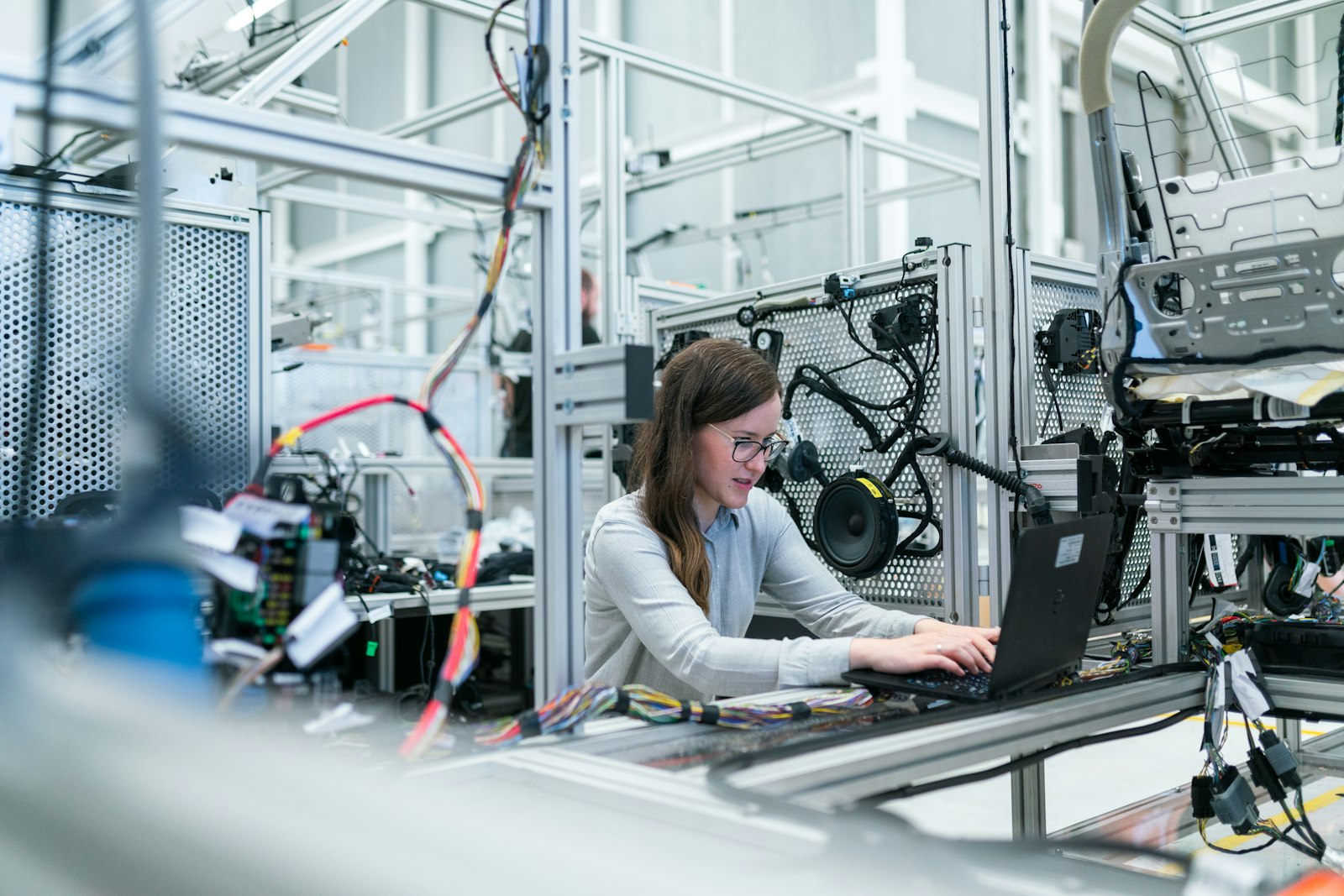
The fourth advantage is human. An economy's infrastructure and supply chain are worth little without the people who operate them. China's workforce combines the raw scale of nearly a billion people of working age with a quality of education and a discipline of execution that, taken together, no other large economy currently matches.
A dense labor pool: the world's largest industrial workforce
Scale shows up not just in engineers but in the sheer density of workers. China's working-age population is on the order of 960 million, with a labor force of roughly 770 million — the largest on earth. The manufacturing sector alone employs more than 100 million people, more than the manufacturing workforces of the United States, Germany, Japan and South Korea combined. When a factory or warehouse needs to staff up, it is hiring from the deepest bench of industrial workers in the world — a bench replenished every year by millions of graduates from vocational and technical colleges.
This density changes the economics of hiring in ways investors feel directly. In the Pearl River Delta or the Yangtze River Delta, an employer looking for machine operators, line workers, logistics staff or skilled technicians can usually fill roles within days rather than weeks, drawing on experienced workers who have spent years — sometimes a generation — in the same industry. Wage growth is real, but so is supply: the sheer number of trained workers keeps recruitment cost-effective relative to markets where labor is scarcer and hiring cycles stretch for months.
High-density labor also supports scale in a way thin markets cannot. A large production ramp — a new automotive line, a seasonal e-commerce surge, a new electronics launch — can pull in thousands of additional workers from the surrounding cluster without collapsing the local labor market, and the same density lets employers run multiple shifts or scale up for peak demand without structural disruption. That is the population dividend still at work: not cheap labor, but abundant, experienced labor that can be organized at the scale modern manufacturing demands — and hired fast enough to win orders on speed.
Discipline and reliability at industrial scale
Investors who have operated in China consistently report the same thing: the workforce is exceptionally disciplined, punctual and dependable. Absenteeism is low, shift discipline is high, and factories can scale production up or down with a predictability that keeps quality stable and delivery commitments met. This is partly cultural, partly the product of a manufacturing tradition that now spans two generations, and partly the result of management systems refined over decades of producing for the world's most demanding brands. Whatever the cause, the effect is what matters: labor that shows up, that executes to specification, and that can be organized at a scale most economies simply cannot assemble.
More STEM graduates than the United States and Europe combined
The depth of China's technical talent is the least appreciated fact in global investing. China produces more than five million science, technology, engineering and mathematics graduates every year — more than the United States and the European Union combined. Each year it graduates on the order of 1.3 million engineers, against roughly 130,000 in the United States. This is not a temporary bulge; it is a sustained, deliberate output of an education system that has prioritized technical fields for decades.
The implications for investors are direct. Companies that need engineers — for software, hardware, manufacturing, chemistry, materials or logistics — can hire from a talent pool whose size and cost make ambitious projects feasible. A team of engineers that would be prohibitively expensive or simply unavailable in many Western markets can be built quickly in China. This is why global technology, automotive and pharmaceutical firms have established their largest research and development centers in China, and why Chinese companies now lead in industries as diverse as electric vehicles, solar equipment, drones and batteries.
The engineer dividend that follows the demographic dividend
Economists used to talk about China's "demographic dividend" — the surge of young workers that fueled three decades of growth. That dividend is maturing, but it is being replaced by something arguably more valuable: an "engineer dividend." China now has the world's largest pool of research and development personnel, on the order of six million full-time equivalents, and it files more patent applications than any other country. The workforce is shifting up the value chain from assembling goods to designing them, and that shift is precisely where the highest margins and the most durable competitive advantages are created. For an investor, China today offers not cheap labor, but skilled labor at scale — the rarest and most valuable input in the modern economy.
Concentrated Industrial Clusters: the power of agglomeration
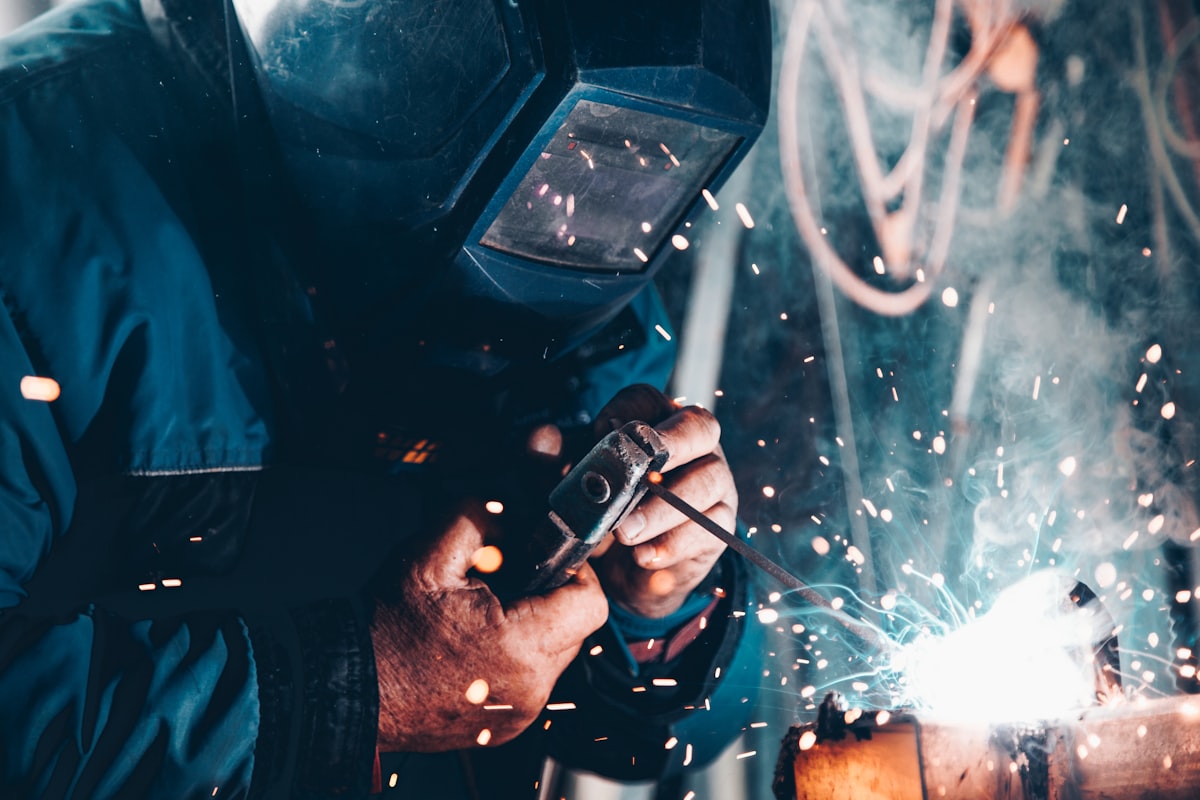
The fifth advantage is geography with intent. China's industrial capability is not scattered evenly across the country; it is deliberately concentrated into clusters, each of which has become a self-reinforcing ecosystem of suppliers, competitors, customers and talent. These clusters create agglomeration economies — the cost and speed benefits that arise when an entire industry lives in one place.
The Pearl River Delta: the world's electronics capital
The Pearl River Delta, centered on Shenzhen, Guangzhou and Dongguan, is the densest electronics manufacturing region on earth. It is home to the headquarters and supply chains of companies that produce everything from smartphones and drones to the components inside them. Shenzhen's wholesale electronics markets are legendary for their depth: nearly any component, connector, sensor or board can be sourced within hours. This density is why a hardware startup can prototype in Shenzhen faster than anywhere else on the planet, and why the region has become the launchpad for global hardware brands.
The Yangtze River Delta: automotive parts, chips and precision manufacturing
The Yangtze River Delta, anchored by Shanghai and extending through Suzhou, Wuxi, Ningbo and Hangzhou, is a different kind of powerhouse. It is China's — and arguably the world's — most complete cluster for automotive parts, semiconductors, advanced materials and precision machinery. The region contains thousands of tier-one and tier-two suppliers, several of the world's busiest ports, and a concentration of engineering talent that keeps the cluster competitive at the highest end of manufacturing. A foreign automaker or industrial-equipment maker entering China finds, within a few hours of Shanghai, essentially every supplier it could need.
Shandong, Beijing-Tianjin-Hebei and beyond
Shandong province anchors one of the world's largest chemical, refining and heavy-industrial clusters. The Beijing-Tianjin-Hebei region concentrates technology, artificial intelligence, biotech and high-end research. The Chengdu-Chongqing region has built a formidable cluster in automobiles, electronics and aerospace. Each of these clusters has its own specialty, but they share a common logic: by concentrating an industry in one place, China multiplies its competitiveness through shared suppliers, deep local labor markets, knowledge spillovers and dramatically lower internal logistics costs.
Scale economies that compound over time
Agglomeration is a virtuous cycle. As a cluster grows, more suppliers locate nearby, which lowers costs and speeds delivery, which attracts more manufacturers, which deepens the labor market and the flow of ideas. China's clusters have now been compounding for decades, and they have crossed a threshold where their advantages are self-sustaining. This is the real reason competitors find it so hard to displace Chinese manufacturing: you can move a factory, but you cannot move a thirty-year-old ecosystem. For an investor, the lesson is that locating inside these clusters is not merely a matter of convenience; it is a source of durable competitive advantage that appreciates the longer you stay.
Political Stability: the continuity that long-horizon capital needs

Capital that commits for ten or twenty years needs one thing above all from a host country: predictability. Short political cycles produce policy whiplash — subsidies created and cancelled, regulations tightened and relaxed, trade rules rewritten with every election. China's system is different, and for long-horizon investors that difference is a feature, not a bug.
Policy continuity without election-cycle reversals
China is governed under a single-party system in which policy direction is set through long, deliberate processes rather than contested every four or five years. The result is an unusual degree of policy continuity. A foreign investor who reads a Chinese industrial plan can reasonably expect that plan to survive changes of personnel, because the planning system itself is designed to carry priorities forward across administrations. In multi-party democracies, a factory built on the promise of a tax incentive can see that incentive reversed within a single term; in China, the equivalent promises tend to be embedded in national strategies that persist for decades. This does not mean policy never changes — it does — but it changes slowly, predictably, and usually in the direction of the country's stated long-term goals.
Five-year plans and forty-year horizons
The most visible expression of this continuity is the five-year plan, a national strategic document that sets economic priorities, industrial targets and infrastructure commitments. The current system is the product of fourteen successive five-year plans, each building on the last, with longer-horizon goals stretching to 2035 and the middle of the century. A foreign company investing in China today is effectively investing against a published, credible, multi-decade development strategy. That is a planning asset almost no other government offers. It means investors can align their own capital allocation with the direction of national policy — investing in electric vehicles when the country commits to electrification, in semiconductors when it commits to self-reliance, in consumer goods as it commits to domestic consumption — with confidence that the direction will not reverse at the next election, because there is no equivalent reversal mechanism.
A consistent, opening economic posture
China's stated policy toward foreign investment has moved consistently in one direction for four decades: opening. The negative list that restricts foreign investment has been repeatedly shortened. The Foreign Investment Law, effective in 2020, codified equal treatment and strengthened protections for foreign investors. Free-trade zones, bonded warehouses and cross-border e-commerce policies have steadily expanded the ways foreign brands can enter the market. None of this means the environment is frictionless — compliance remains a serious discipline — but the trajectory has been unusually consistent, and consistency is exactly what long-term capital is paid to find.
Geopolitical & Security Stability: a safe environment to build and operate
The sixth advantage concerns the conditions in which a business actually operates day to day. Investors discount environments that are insecure, unstable or unsafe, because insecurity taxes everything — logistics, personnel, property and peace of mind. By contrast, China offers a rare combination: strong national defense that underpins geopolitical stability, and an extraordinarily safe domestic society in which to live, hire and build.
Geopolitical stability backed by strength
China maintains one of the world's most capable militaries, with the largest navy by number of ships, a modernizing air force and an increasingly advanced missile and space capability. For investors, the relevant point is not the hardware itself but what it underwrites: a stable external environment in which the country's borders are secure and its core interests are deterred rather than contested. A host country that can guarantee its own security is a host country where supply chains, shipping lanes and industrial assets are less exposed to the conflicts that have disrupted other regions. While no country is entirely insulated from geopolitical tension, China's capacity to defend its interests means its internal investment environment does not swing with every shift in regional politics.
Domestic safety: among the lowest crime rates for a country of this size
On the ground, China is one of the safest large countries in the world to live and do business. Violent crime rates are exceptionally low by global standards, and cities are widely regarded as safe at nearly all hours. This is not a minor quality-of-life detail; it is an operating advantage. Senior executives and their families can relocate with confidence. Warehouses, stores and offices can operate around the clock without the security costs that are routine in many other markets. Field teams can travel domestically with low personal risk. A predictable legal environment for contracts and property, combined with social order, lowers the invisible tax that insecurity imposes on business everywhere it exists.
For foreign investors and brands, this combination of external deterrence and internal order is quietly decisive. It is what allows a company to commit people, capital and multi-year plans to a market without discounting for instability. In a world where instability is increasingly the default assumption, the stability premium China offers is itself a form of return.
City Clusters — Urban Agglomeration at Scale: population, demand and infrastructure in one place
China's market advantage is often framed as a national statistic — 1.4 billion people — but the more useful way to understand it is through its city clusters. Instead of one or two giant cities, China has built a small number of vast, connected urban regions in which population, consumption, production and logistics are packed tightly together. That density lowers the cost of reaching consumers and partners alike.
World-class urban agglomerations
Three of these clusters are genuinely world-class. The Yangtze River Delta, anchored by Shanghai and extending through Suzhou, Hangzhou and Nanjing, holds roughly 235 million people and an economy comparable to a large developed nation. The Guangdong-Hong Kong-Macao Greater Bay Area, centered on the Pearl River Delta, packs about 86 million people into one of the most productive regions on earth. The Beijing-Tianjin-Hebei cluster in the north adds roughly 110 million more. National planning now recognizes 19 urban agglomerations, and together they generate the overwhelming share of China's GDP, innovation and consumption.
Concentration lowers the cost of everything
Density is not an aesthetic; it is an economic engine. When tens of millions of consumers live within a few hours of each other, a brand can reach a mass market with a fraction of the distribution network it would need in a spread-out country. When suppliers, customers and talent sit in the same region, coordination costs fall and ideas move faster. When ports, highways, high-speed rail and airports are shared across a cluster, every company in it enjoys infrastructure it could never afford alone. The cost of serving a customer in the Yangtze River Delta — the last mile, the marketing, the logistics — is among the lowest of any large market in the world.
Logistics, talent and demand in one place
Inside a cluster, the three scarcest business inputs come together. Logistics: the densest port, rail and expressway networks on earth mean a shipment can clear a port in Shanghai and reach a warehouse in Suzhou or Hangzhou the same day. Talent: a cluster concentrates not just workers but specialized engineers, designers and managers, so building a full team does not require relocation or a national search. Demand: consumers are not only numerous but concentrated, which makes store networks and digital marketing cheaper per customer. The result is a compounding advantage — the cluster attracts people and companies because it is dense, and that density makes it more attractive still.
For a foreign investor the implication is simple: you do not need to be everywhere in China on day one — you need to be in the right cluster. Locating inside a world-class urban agglomeration gives a company simultaneous access to a deep supply chain, a deep labor market and a deep consumer base: the whole system in miniature, within a few hundred kilometers.
The Market Advantage: 1.4 billion consumers and the world's largest digital economy

Every advantage described so far ultimately serves one purpose: the market. China is home to 1.4 billion people, the largest consumer base in the world, and it is converting that population into the largest middle class in history. For foreign investors and brands, this is where the story lands.
The largest consumer market and a 400-million middle class
More than 400 million people in China now form a middle class larger than the entire population of the United States, and it is still growing. These consumers are not merely numerous; they are upgrading. As incomes rise, Chinese households are shifting spending from necessities toward health, education, travel, premium goods, experiences and brands — precisely the categories where foreign companies hold their strongest advantages. A brand that captures even a modest share of this middle class can build a business larger than the total market of many countries.
The world's number one e-commerce market
China is the largest e-commerce market on earth, with online retail well over two trillion US dollars annually and growing. More importantly, Chinese consumers are the most digitally fluent in the world. They discover products on short-video and social platforms, purchase in-app, pay by mobile phone, and expect delivery within a day or two. Mobile payment through platforms like Alipay and WeChat Pay is effectively universal, including in street markets and rural towns. For a foreign brand, this digital maturity means the cost of reaching consumers is falling even as the sophistication of the tools rises — live-streaming commerce, social commerce and membership retail all offer channels that did not exist a decade ago.
Seven of the world's ten busiest container ports
China's market advantage is physical as well as digital. Seven of the world's ten busiest container ports are Chinese, led by Shanghai, the busiest container port on the planet, and Ningbo-Zhoushan, the busiest by total cargo tonnage. This port capacity means the goods that serve China's consumers — and the exports that carry Chinese-made products to the world — move with a throughput no other country matches. For an investor, it is the infrastructure of scale itself: the ability to import, distribute and export at volumes that would strain other markets.
A digital economy that leads the world
China's digital economy now accounts for a substantial share of its GDP, among the highest ratios of any large economy. The country operates the world's largest 5G network, with millions of base stations — well over half the global total — and leads in areas from mobile payments and e-commerce logistics to artificial-intelligence deployment and industrial digitalization. For a foreign investor, this digital infrastructure lowers the cost of every transaction and unlocks business models that are only possible at China's scale. The market is not merely large; it is wired.
Conclusion: China is where the next version of your story can begin
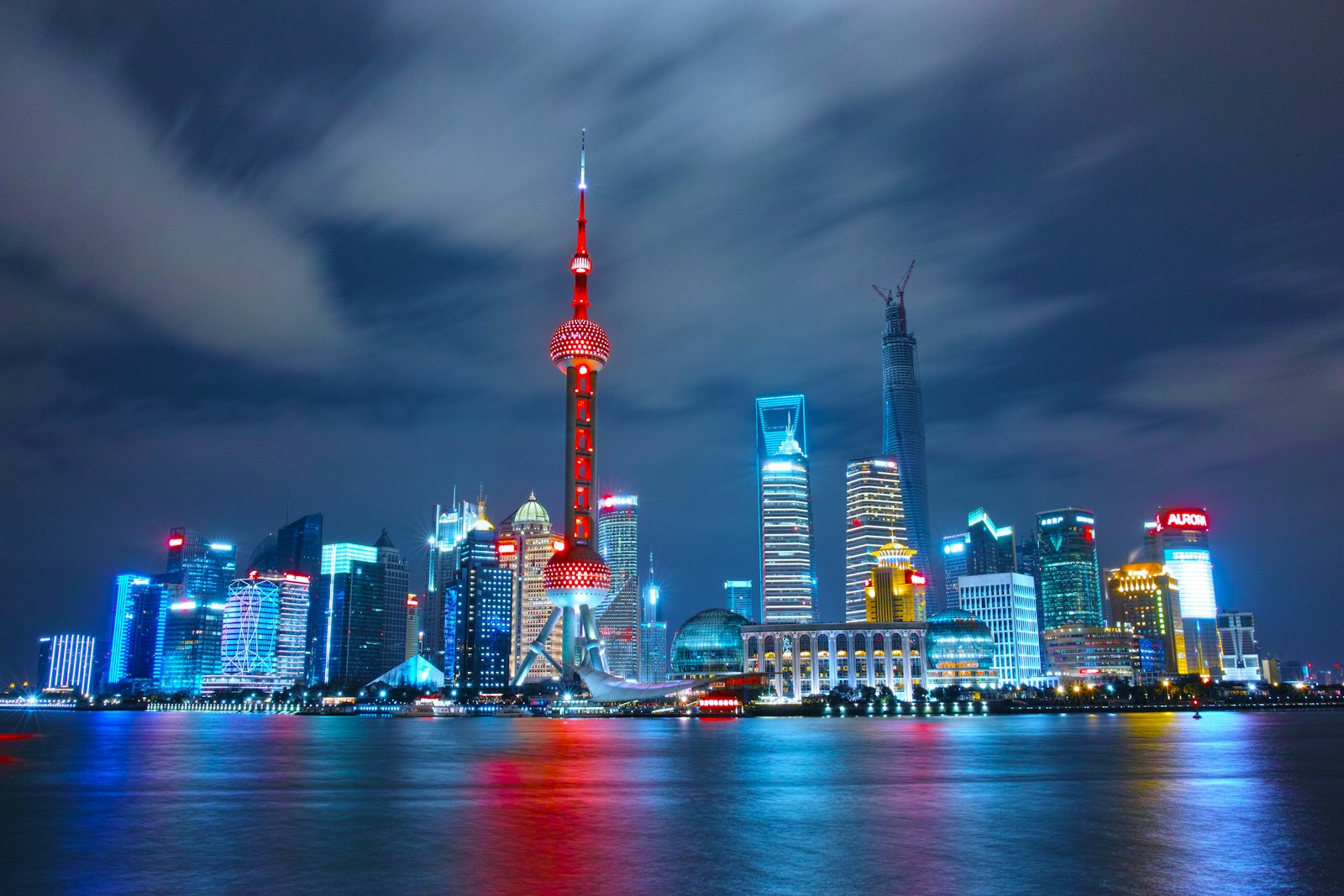
The case for China is not a list of separate advantages. It is one self-reinforcing system. Infrastructure moves goods quickly because the supply chain is complete. The supply chain is complete because the workforce is deep. The workforce is productive because energy, logistics and industrial clusters are built at national scale. The clusters thrive because policy is continuous and demand is close. All of it serves 1.4 billion consumers and the world's most advanced digital commerce environment.
This is why China should not be understood only as a place to sell, source or invest. It should be understood as an amplifier. A good consumer product can become a national category story. A strong brand can find a second growth curve. A specialized industrial supplier can become part of a larger manufacturing ecosystem. A patient investor can turn land, factory, R&D and local talent into an operating platform that compounds for years.
Discover China Market exists for that turning point. We are not simply a directory, a platform or a consulting name. We help serious builders imagine what their future in China could look like, then turn that imagination into a practical route: channels, buyers, compliance, partners, locations and local operating logic.
Imagine a future where your product is not waiting outside the market, your brand is not invisible to Chinese consumers, your technology is not disconnected from the world's deepest industrial base, and your capital is not watching opportunity from a distance. That future starts with one clear route in.